Fellowships
The Wainwright Fund is privileged to be able to support three-year Postdoctoral Research Fellowships and, when possible, one-year Early Career Fellowships. These Fellowships provide opportunities for outstanding early career scholars to develop their research in the archaeology of the Middle East and North Africa (excluding literary or philological studies).
Our fellows conduct research on the human past from the Palaeolithic up to and including the Medieval and post-Medieval periods, apart from Classical Antiquity (i.e. the sphere of influence of the Classical Greek and Roman Worlds, between c. 600 BCE and 500 CE), in the Middle East and North Africa (a full list of modern countries covered by these terms is given on the home page).
The schedule for advertisement of these fellowships is at the discretion of the Board.
Testimonials from Our Fellows:
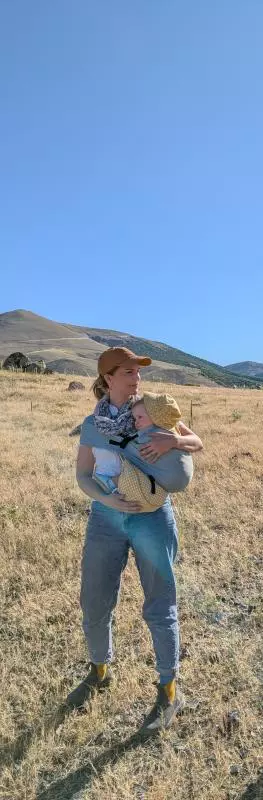
Jo-Hannah Plug
I’m a G.A. Wainwright Postdoctoral Research Fellow, based at the Department of Archaeology, Classics and Egyptology, University of Liverpool (academic mentor Prof. Douglas Baird) and the Faculty of Asian and Middle Eastern Studies, University of Oxford. I’m currently a year into my 3-year fellowship, awarded in May 2025. My research project, ‘On the Threshold of Urbanism: Investigating 4th–3rd Millennium BCE Pınarbaşı’, focusses on the social context that gave rise to the earliest cities in central Anatolia, which integrates archaeological (excavation and survey) and bioarchaeological (multi-isotope and aDNA) data from the Konya Plain, Türkiye. The G.A. Wainwright Fund has not only generously funded my research, but has also provided invaluable mentorship, guidance, and opportunities to expand my professional network in the UK and internationally. What I value most is their genuinely personal approach: they are inclusive, flexible, communicative, and exceptionally supportive, going well beyond what one might expect from any funding body.

Ikram Ghabriel
I am a G. A. Wainwright Early Career Research Fellow in Near Eastern Archaeology at the University of Oxford’s Faculty of Asian and Middle Eastern Studies. My research explores access to sacred spaces in New Kingdom Egypt, focusing on the royal memorial temples of western Thebes and how local communities interacted with and experienced the city’s religious architecture. My work draws on theoretical approaches from microarchaeology and social archaeology, examining individual actions and practices to better understand the patterns that shaped ancient Egyptian culture. Through this approach, my research seeks to highlight the diversity of interpretations that can emerge from archaeological material. The Wainwright Fund supports my fieldwork at the royal memorial temples in Luxor, as well as research visits to archaeological archives in Cairo where I gather and analyse primary data. This support provides both the opportunity and the flexibility to pursue my research in the UK and Egypt. I would highly recommend the fund to fellow researchers seeking to undertake ground-breaking scholarship.

Matthew Dalton
I undertook a one-year Wainwright Fellowship in the Faculty of Asian and Middle Eastern Studies at the University of Oxford. I was also fortunate to be awarded a non-stipendiary Junior Research Fellowship at Wolfson College, which gave me a further academic and social hub during my year in Oxford.
My fellowship project focused on part of Nubia in modern-day Sudan and involved applying advanced digital techniques to archival records from the mid-20th century. I was able to reconstruct the topography and dense archaeological landscapes of the region in high detail using historic aerial photography and excavation records. I then combined hydraulic modelling of the River Nile with archaeological evidence to assess how the river's flood levels have ebbed and flowed over the past few millennia in response to climate change in central Africa, and how these changes affected the diverse populations of the desert Nile Valley.
Aside from providing a salary (making my project possible in the first place!), the fellowship also gave me access to generous research funding, which I used to source essential archival materials and travel to conferences to present my results and meet others carrying out similar research. The fund's team and departmental administrators were unfailingly supportive and helpful whenever I needed advice. Overall, I wouldn't hesitate to recommend the fellowship to any early career researchers interested in the rare and valuable opportunity of spending an extended period pursuing and developing their own research.
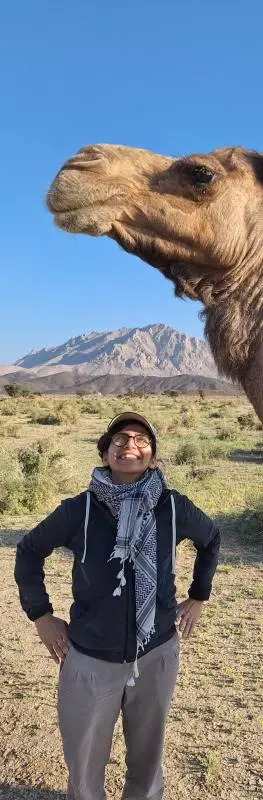
Akshyeta Suryanarayan
As a Wainwright Research Fellow (2023–2026) based at the McDonald Institute for Archaeological Research, University of Cambridge, I use organic residue analysis and exploratory Social Network Analysis to investigate patterns of consumption, exchange and connectivity in the Persian Gulf, with a focus on southeastern Arabia and its relationship with Mesopotamia, eastern Arabia, the Indus Civilisation and southeastern Iran during the Early and Middle Bronze Age (c. 3000-1600 BCE).
The fellowship has enabled me to undertake training in network analysis, present at international conferences, develop new international collaborations, publish my research, secure additional research funding, and apply for other competitive grants. It has provided me with the intellectual freedom and resources to develop my research and ideas on ancient exchange networks and foodways at a crucial stage in my career. I would highly recommend the Wainwright Research Fellowship to others as it provides early-career researchers the flexibility, time and resources needed to pursue ambitious research agendas.
Hannah Caroe
For my one-year Wainwright Fellowship I was affiliated with the Faculty of Asian and Middle Eastern Studies and the School of Archaeology at Oxford University. My particular research focus was the Epipalaeolithic-Neolithic transition in northern Iran: specifically two sites on the southern shore of the Caspian Sea, Hotu and Kamarband Caves. An archaeobotanist, I examined assemblages of charred plant material from each site – these are rich and well-preserved and give unique insights into the transition between foraging and farming lifeways for all of northeast Iran and beyond – an archaeobotanically very little researched region.
My research involved use of GIS mapping software and – to assist with plant identifications – scanning electron microscopy. Identification work also involved consulting the preserved carpological collection in the School of Archaeology and additional plant material in the University’s Sherardian Library of Plant Taxonomy. My research entire was made possible through funding of my subsistence and research costs by the G.A. Wainwright Fund, for which I will always be deeply grateful. I would encourage anybody with research interests in the archaeology of southwest Asia to apply for support from the peerless Wainwright fund.
My research continues at the School of Archaeology, where I am currently a Research Fellow funded by the British Institute for Persian Studies.
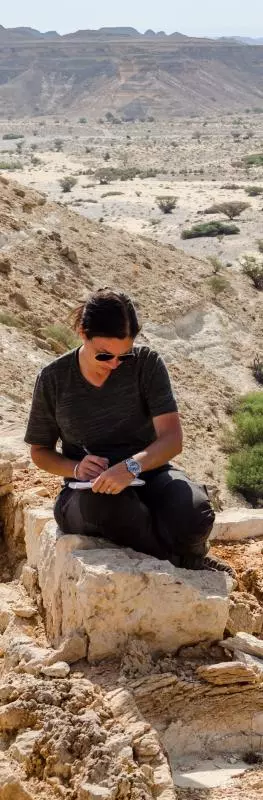
Silvia Lischi
During my Wainwright Research Fellowship in 2023, I was affiliated with the University of Oxford, Faculty of Asian and Middle Eastern Studies. My project focused on Iron Age Dhofar, in southern Oman, and aimed to prepare the results of my doctoral research for publication as a monograph. This work brought together excavation data, GIS-based landscape analysis, material culture studies, and palaeoenvironmental evidence from the DHOMIAP project, contributing to the definition of the Dhofar Coastal Culture, a previously little-known Iron Age cultural horizon.
The Wainwright Fellowship gave me the time, institutional setting, and intellectual space to consolidate several years of fieldwork into a coherent publication project. More importantly, it allowed me to engage with a stimulating academic environment beyond the framework of my doctoral training. I would strongly recommend the Fellowship to researchers seeking to develop their work in dialogue with new scholarly communities.
I am now a postdoctoral researcher at the Jaussen & Savignac Research Centre, Université Paris 1 Panthéon-Sorbonne, in collaboration with CNRS – Orient & Méditerranée.

Aroa García-Suárez
I held the G. A. Wainwright Early Career Fellowship in 2019 at the Oriental Institute, University of Oxford. My project investigated 9th-millennium transformations in human-animal relationships among early settled communities in Southwest Asia. During my fellowship, I analysed microscopic evidence from dung deposits and activity surfaces at the Neolithic sites of Boncuklu and Pınarbaşı using integrated micromorphological and microfossil analyses to explore how neighbouring communities experimented with different animal management strategies.
The fellowship gave me the freedom to pursue an independent line of research while benefiting from Oxford’s exceptional interdisciplinary environment. It enabled me to refine methodologies, establish lasting international collaborations and lay the foundations for a research programme that continues to underpin my current projects on the ecology, economy and social organisation of the first farming communities.
I am currently a Ramón y Cajal tenure-track researcher at the University of Granada, where I teach Geoarchaeology and Prehistoric Archaeology while leading research on the emergence and spread of Neolithic lifeways.
Amy Richardson
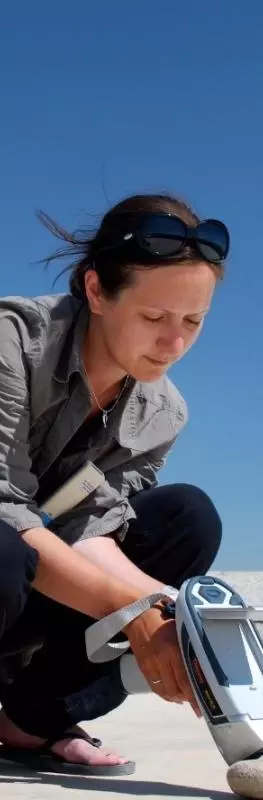
As a Wainwright Fellow (2014-2017), my project 'Transforming Societies: Networks of Materiality in the Neolithic Eastern Fertile Crescent' investigated early connectivity and material use in the Central Zagros Mountains of Iraq and Iran. Working with recently excavated and historic collections, I applied combined material, spatial and network analysis to shed light on the relationship between communities and landscape resources. The Wainwright Fellowship was an extraordinary opportunity to develop my approaches, explore new ideas, and take risks in my research amongst the vibrant academic community at the Institute of Archaeology at Oxford. With peer support and mentoring, I built research and leadership skills that have shaped my research directions and forged new trajectories in the years since. My most recent project, States of Clay: Integrated Scientific Approaches to Clay Bureaucratic Objects from Early Mesopotamia, 3700-2700 BCE (a collaboration between the University of Reading and the Vorderasiatisches Museum, Berlin) was first seeded during my time as Wainwright Fellow, which gave me the freedom and support to expand the horizons of my research.
Lucy Wadeson
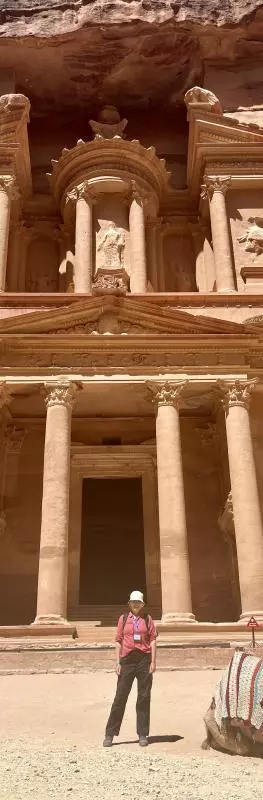
I held the position of G.A. Wainwright Postdoctoral Fellow at the Oriental Institute, University of Oxford from 2010 – 2013. During my fellowship, I was based at the British Institute (CBRL) in Amman, Jordan where I continued my research on the Nabataean rock-cut façade tombs at Petra (1st century BCE – 1st century CE). My DPhil thesis made the first ever study of the interiors of these tombs, shedding light on the elusive Nabataean funerary customs and the dating of the tombs. The Wainwright Fellowship provided me with the opportunity to expand upon this research with the creation of new archaeological projects in Petra, including the excavation of tombs in the ‘royal’ necropolis (‘The International al-Khubthah Tombs Project’) and the study of the topographical placement of the tombs and their exterior features (‘The Funerary Topography of Petra Project’). Being based in Jordan during this period of research and having the support of the Wainwright Fellowship was fundamental to the development of my career. I am currently an associate lecturer in Ancient History and Archaeology at the School of Classics, University of St Andrews.
Robert Andrew Carter
I held my Wainwright Fellowship between 2003 and 2006, using the opportunity to study the origins of seafaring and maritime trade in the Arabian Gulf. I was fortunate that Andrew Sherratt was on the selection committee, as this topic meshed perfectly with his interests in prehistoric long-distance trade. During my fellowship I was affiliated with the University of Durham, allowing me to engage with one of the few departments in the UK that was active in Arabian archaeology. The work was based on excavations at a late 6th to early 5th millennium BC site in Kuwait. The fellowship allowed me not only to complete the site monograph with the project's co-director, Harriet Crawford (Maritime Interactions in the Arabian Neolithic, 2010), but also to organize a conference on the Ubaid period in Durham, co-edited with Graham Philip (Beyond the Ubaid, 2006). The Wainwright Fellowship was an essential stepping-stone in my career, which eventually led to a full Professorship in Arabian Archaeology. I am currently with Qatar Museums, directing projects and research in archaeology and heritage.